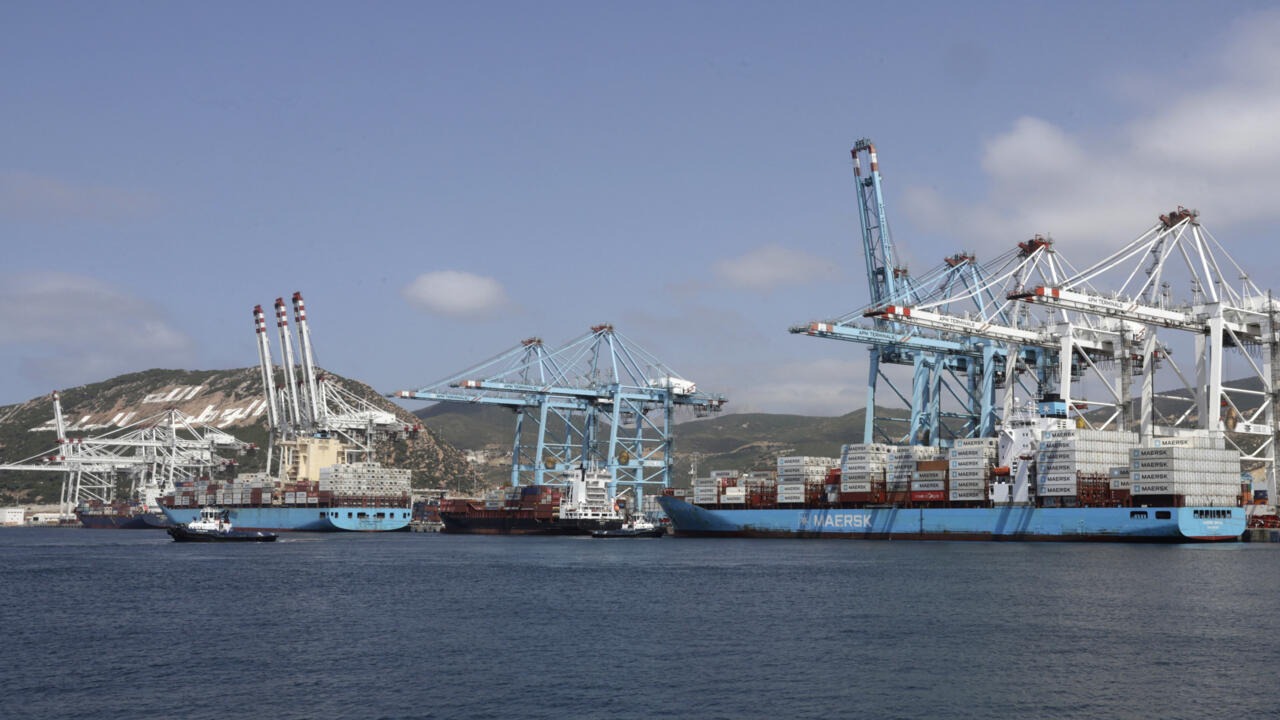

Morocco is entering a new phase in its maritime development. The first National Maritime Conference, held in Tangier on 21 and 22 May 2026 under the theme “Morocco, an Emerging Maritime Nation”, marked an important step towards establishing a new national maritime strategy. The event brought together public authorities, maritime professionals, international experts and private-sector stakeholders to discuss the future of Morocco’s maritime sector.
At the heart of the discussions was the ambition to rebuild a competitive Moroccan merchant fleet. This objective reflects a strategic reality: around 95% of Morocco’s foreign trade is transported by sea, while the country currently controls only a limited share of these maritime flows. The strategy therefore seeks not only to strengthen the Moroccan flag, but also to increase national control over the economic value generated by maritime transport and logistics.
The strategic study presented during the conference, prepared by the Boston Consulting Group for the Moroccan Ministry of Transport and Logistics, proposes the establishment of an initial fleet of around 20 vessels by 2030, including at least eight owned directly. The estimated investment is approximately MAD 3.4 billion, with the fleet expected to generate around MAD 3.6 billion in annual turnover and create more than 1,200 direct jobs.
The strategy focuses on three priority markets. The first is the Ro-Ro and Ro-Pax segment, particularly across the Strait of Gibraltar. The second is dry bulk, including strategic commodities such as phosphates and cereals. The third is container feedering between the Mediterranean and the Atlantic coast of Africa, leveraging Morocco’s strategic location as a regional logistics platform.
However, rebuilding the fleet will require more than purchasing ships. The competitiveness of the Moroccan flag remains a major challenge, particularly because operating costs and taxation can be significantly higher than under some European flags. The proposed response includes dedicated financing mechanisms, public guarantees, maritime leasing and the introduction of a tonnage tax regime.
The Tangier conference also highlighted the need for stronger maritime governance. Among the recommendations is the creation of a National Higher Council for the Sea, as well as the establishment of a Moroccan International Register designed to make the national flag more attractive to shipowners. Digitalisation, maritime safety, human capital, innovation, and decarbonisation were also identified as essential components of the future strategy.
Morocco’s objective is therefore broader than simply restoring a merchant fleet. It is about strengthening maritime sovereignty, capturing a greater share of the value generated by foreign trade, supporting the Atlantic and African strategies and consolidating the Kingdom’s position as a strategic maritime hub connecting Europe, the Mediterranean and Africa. The challenge now is to transform the ambitious roadmap presented in Tangier into a competitive and sustainable maritime ecosystem by 2030.