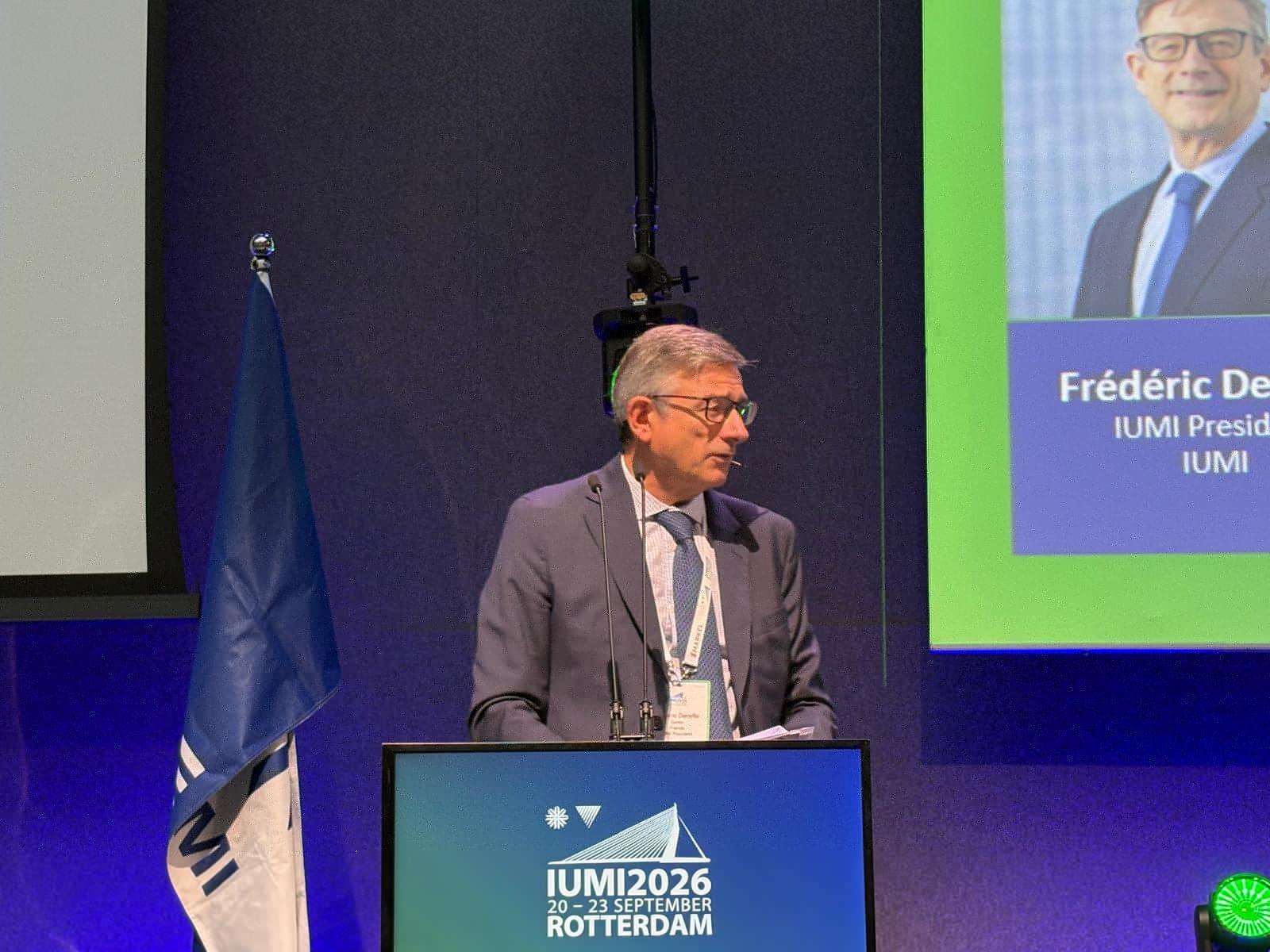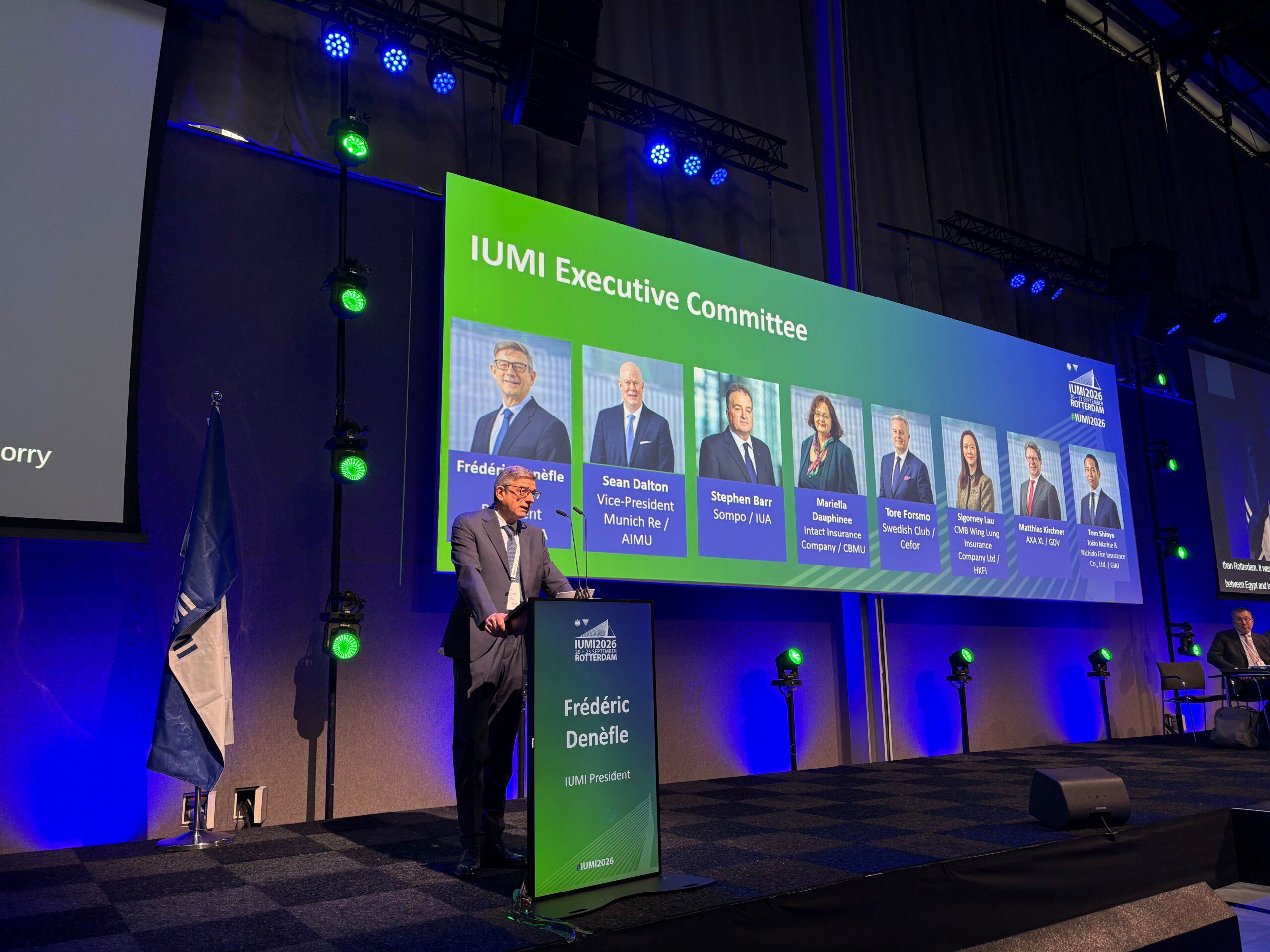


Marine insurers are at the heart of managing war risks to global shipping and must continue to develop the tools needed to support and facilitate international trade in increasingly challenging conditions, according to IUMI President Frédéric Denèfle.
Chairing the President’s Workshop at this week’s International Union of Marine Insurance (IUMI) conference in Rotterdam, Denèfle emphasised the importance of ensuring that assureds and the wider maritime community understand the complexities of war risk insurance, particularly during periods of heightened tension and conflict.
“As marine insurers, we are at the very heart of the risk, and we must ensure that we continue to develop the optimum tools to support and facilitate global trade in all conditions, no matter how challenging.”
Denèfle highlighted a common misconception that war insurance cover is automatically cancelled when a conflict situation arises.
“When a conflict situation arises, there is often a misunderstanding that cover is cancelled. This is not necessarily the case. When risk increases significantly, some insurers will serve a Notice of Cancellation in relation to the cover their assureds have in place. This enables the insurer to reassess the risk and then reinstate the cover on adjusted terms.”
“It is important to recognise that a Notice of Cancellation does not necessarily end the cover. The cover can be amended to ensure that the insurer and the client can address the renewed risk together, with confidence in both the terms and the price. In the current dynamic environment, we must remain flexible and adaptable.”
Denèfle also highlighted the additional information underwriters require to assess and implement war risk cover effectively. Under conventional marine insurance, underwriters will typically consider factors such as a vessel’s age, flag, class and trading history. War risk underwriting, however, requires much more detailed information about the proposed voyage.
This includes the specific trading and transit areas involved, the length of time a vessel is expected to spend in high-risk zones and the time required to load and discharge cargo. Obtaining this information can be challenging for some cargo owners who may not have detailed knowledge of the precise voyage or transit arrangements.
Similarly, where high-risk areas are involved, cargo cover will generally be offered on a per-contract basis rather than through the more general annual open cover arrangements that many cargo owners have historically relied upon.
Denèfle also addressed the increasing importance of risk mitigation measures, including efforts by nation states to provide naval escorts and other forms of protection.
“Whilst this is hugely appreciated, insurers cannot completely rely on protection being available for every transit. The availability and reliability of such protection must also be taken into account when offering cover,” he said.
A further complexity is the risk of CNED — confiscation, expropriation, nationalisation or dispossession. These risks can become particularly significant during periods of conflict, when states may seek to take control or ownership of vessels or cargo.
“CNED risks in times of war are significant and can arise when states decide to take control or ownership of a vessel or its cargo. It is therefore important for an insurer to fully understand how long a vessel will be operating in a high-risk zone and, in particular, how much time it will spend alongside loading or discharging.”
“In general, cover is provided for a limited period in order to minimise exposure to CNED risks as far as possible.”
Denèfle concluded “Cover for war risks is becoming more commonplace, and it is important for vessel and cargo owners to understand that insurers need much more information than ever before in order to create tailor-made contracts that deliver adequate protection. Global, blanket cover is simply not an option anymore.”
Related topics