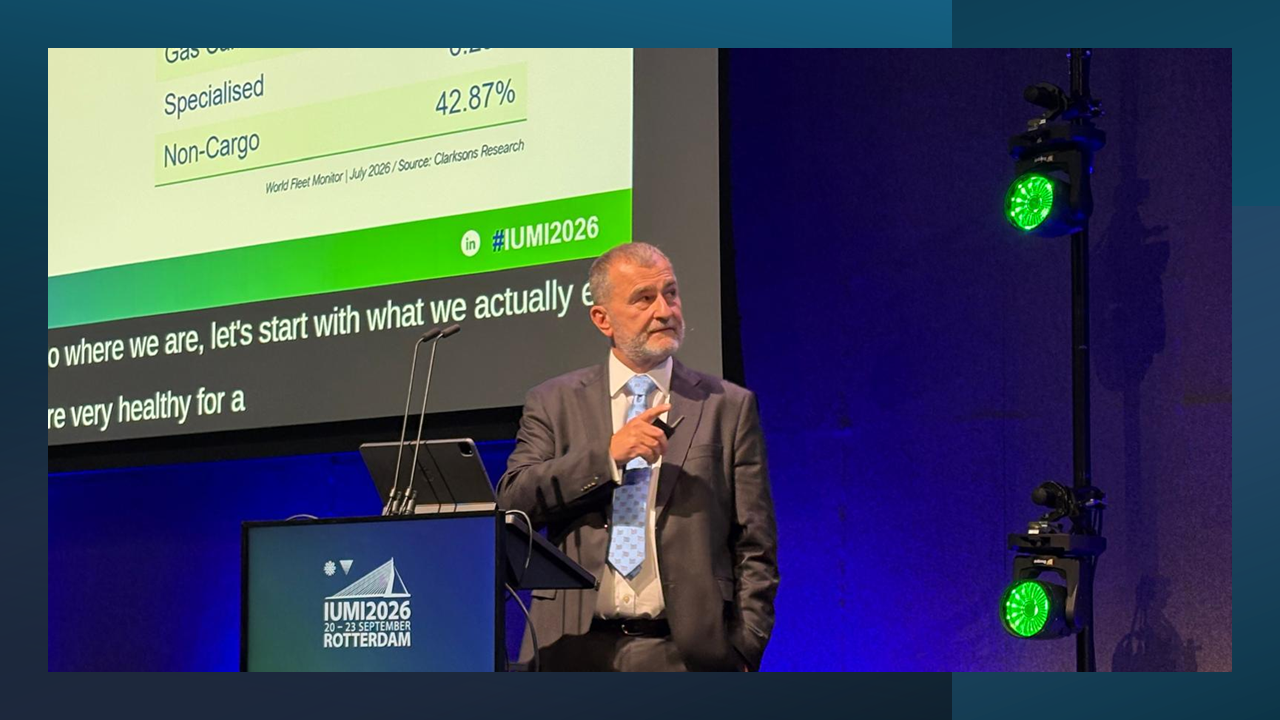


Marine insurers will need to place greater emphasis on loss prevention as risks become more complex and costly to insure, according to Pascal Dubois, Chair of the International Union of Marine Insurance (IUMI) Loss Prevention Committee.
Speaking at the IUMI Annual Conference in Rotterdam today, Dubois highlighted what he sees as a broader shift across society and the insurance industry – from responding to losses after they occur to taking measures to prevent or minimise them in the first place.
“At a macro level, nations are increasingly recognising that allocating capital alone will not be enough to manage climate change. Prevention is now becoming an important component of public policy, helping to contain the costs associated with climate change while also reducing the impact of events such as wildfires, floods and other natural catastrophes.”
“This is about preventing an event from occurring or limiting its impact, rather than simply repairing the damage afterwards. We are definitely seeing a global transition from ‘repairing’ to ‘prevention’ and marine insurance should take note.”
Dubois acknowledged that marine insurers already undertake extensive loss prevention activities but believes these will need to evolve further as the risk landscape becomes increasingly complex and uncertain.
He also expects loss prevention to become less concentrated among the larger insurers, with preventative measures increasingly adopted across the SME sector.
“Nowadays, the issue for an underwriter is not only price and conditions. It is increasingly about incorporating loss prevention into the insurance proposition and I see this spreading across all elements of our sector.”
“As our business becomes more complex and uncertain, some insurers may simply be unable to offer cover for certain activities because premiums become unaffordable or risk appetites become too restricted. We are already seeing this in the wider insurance market in relation to certain natural catastrophe risks.”
Dubois expects marine insurers to invest further in prevention capabilities over the coming years, including greater access to technical expertise and dedicated loss prevention specialists.
“Currently, underwriters and claims handlers far outweigh loss prevention professionals. I expect this balance to begin to change as insurers respond to an increasingly complex and uncertain risk environment.”
IUMI’s role is to raise awareness of systemic risks across the global marine insurance community encouraging insurers to develop and implement effective loss prevention programmes within their own organisations.
The association also provides specialist guidance on emerging risk issues. The Loss Prevention Committee and Cargo Committee are currently working together on the use of wood packaging materials – including pallets and crates – in the transportation of cargo. The use of such materials is regulated by the International Standards for Phytosanitary Measures (ISPM) 15, but the requirements are not always well understood.
IUMI’s guidance highlights that non-compliance with ISPM 15 will generally result in operational disruption rather than physical damage to the cargo itself. It also addresses responsibilities and compliance throughout the supply chain and identifies simple, low-cost measures that can help prevent disruption.
The guidance is available here: https://iumi.com/policy/position-papers/ispm-15-guidance-to-avoid-the-risks-associated-with-non-compliant-wood-packaging-material/
Related topics