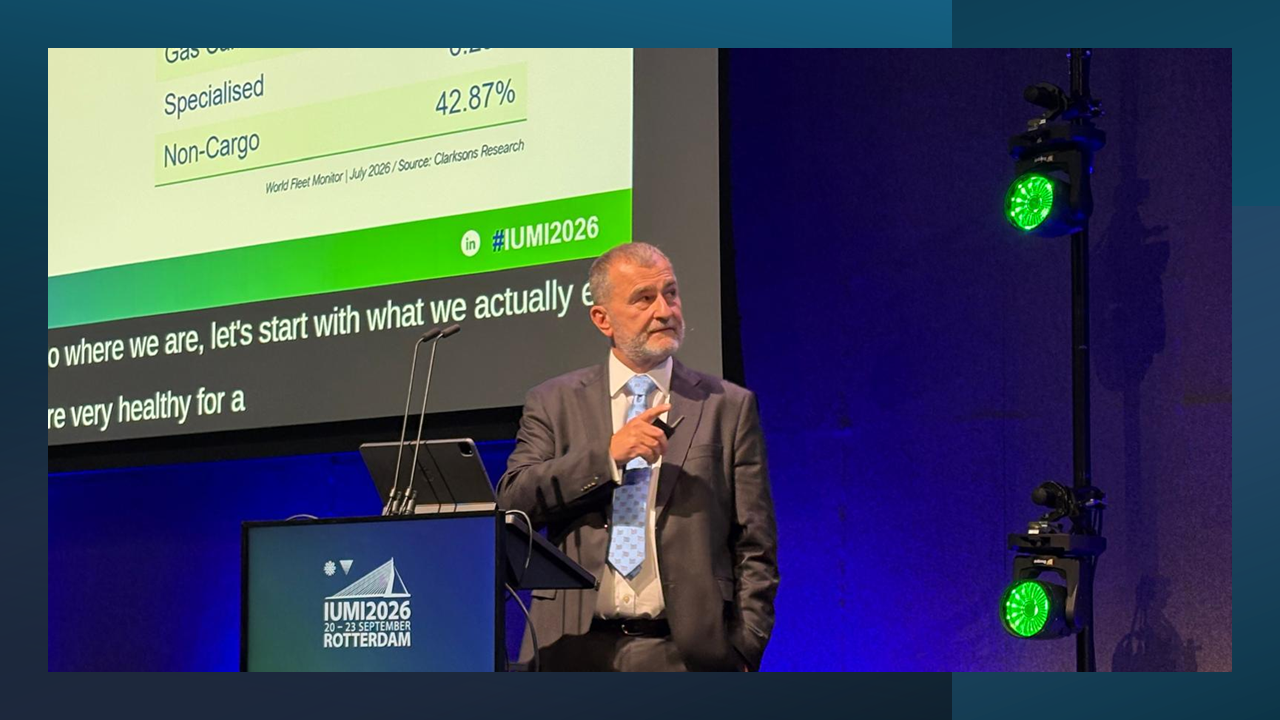


At its annual conference in Rotterdam today, the International Union of Marine Insurance (IUMI) discussed whether freight forwarding liability insurance should become a greater focus of its work, recognising the increasingly important role freight forwarders play in managing global supply chain risks.
Freight forwarding liability is an important subline of marine insurance but one that has received less systematic attention from the international marine insurance community than cargo insurance.
Freight forwarders occupy a central position in global supply chains, coordinating transport, logistics and other activities on behalf of their customers. Growing geopolitical tensions, conflicts, trade disruption and other supply chain challenges are further expanding their role, with forwarders increasingly providing alternative solutions, including crisis management, to help customers manage disruption.
Matthias Kirchner, IUMI Executive Committee member and conference workshop chair explains:
“The logistics industry is very creative, flexible and innovative which continuously finds new solutions. The freight forwarder is often at the centre of the supply chain organising and arranging all relevant activities for their clients globally. This is becoming increasingly a strategic role but unlike cargo insurance, there is no globally consistent wording for freight forwarding liability insurance. Legal and regulatory frameworks vary considerably between countries, while insurers generally use their own individual policy wordings. There might be a role here for IUMI to address some of these challenges and, perhaps, consider a platform for sharing information.”
The workshop also discussed whether greater consistency could eventually be achieved through the development of a global freight forwarding liability insurance standard, alongside the collection of international market statistics for the subline. Any such developments would require further consideration and would need to reflect the significant differences between individual jurisdictions.
The changing role of freight forwarders is also placing greater emphasis on risk management and loss prevention. As forwarders increasingly act as supply chain coordinators and use technology to anticipate and respond to disruption, effective risk management needs to extend beyond the physical movement of cargo. Areas requiring attention include organisational structures, operational risk management, subcontractor oversight, documentation and information management, contractual arrangements, incident and claims response, appropriate liability insurance and continuous improvement.
Kirchner said:
“For IUMI, the discussion reflects the wider evolution of marine insurance as global trade becomes increasingly exposed to disruption, geopolitical uncertainty and complex supply chain risks. Freight forwarding liability insurance is relevant because it supports the logistics company to make the supply chains more resilient. It deserves much more attention because it plays a vital role in the development of global trade in a world of disruption, geopolitics and crisis.”
Related topics