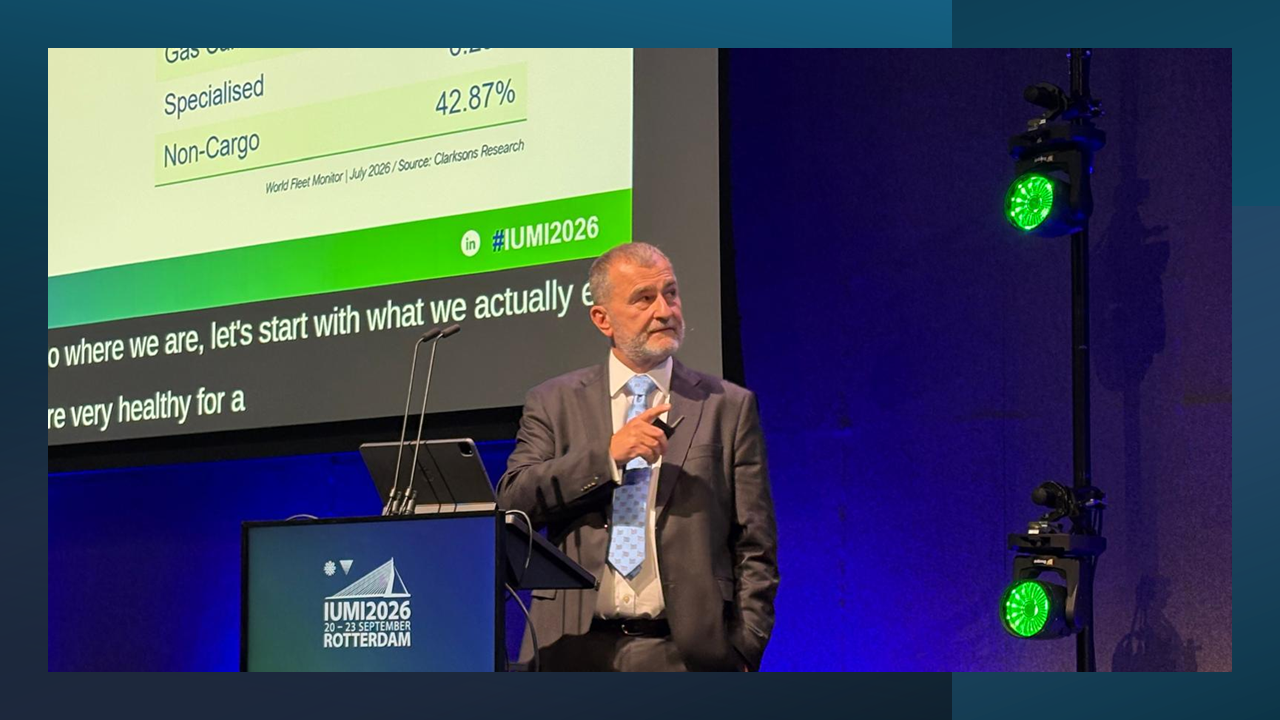


The global ocean hull insurance market is continuing to soften despite apparent growth in the overall premium base, according to Ilias P.Tsakiris, Chair of the Ocean Hull Committee speaking at the International Union of Marine Insurance (IUMI) annual conference in Rotterdam today.
According to IUMI’s latest research, the global hull premium base reached USD 10.5 billion in 2025, representing a 9.4% increase on the previous year. However, Tsakiris cautioned that the headline growth figure does not tell the full story.
“A 9.4% increase in premium income needs to be viewed in context. Fleet growth, elevated vessel values and exchange-rate movements all contribute to that increase. Headline premium growth should not be mistaken for stronger rates or improved underwriting profitability. Despite the increase in premium income, the underlying hull market continues to soften.”
Premium growth across the major regional markets has been relatively consistent, with Europe and Asia both recording increases of approximately 6-7%. Latin America performed more strongly, although it continues to represent a considerably smaller share of the global hull market.
Meanwhile, global fleet growth continues, albeit at a slower rate than in previous years, and is expected to reach approximately 3% by the end of 2026.
With vessel scrapping remaining subdued, the global merchant fleet is continuing to age. The average age of a merchant vessel has now reached 22.4 years, creating additional pressure for hull underwriters. Older vessels generally require more frequent maintenance and repair, while shortages of spare parts, particularly for older tonnage, are contributing to higher claims costs. Additional pressure is also emerging from increased Port State Control activity in a number of regions, which can result in greater inspection, detention and repair exposure.
Reported loss ratios remain relatively favourable in several major markets, although the figures are compiled on different accounting bases. Europe’s 2025 estimate is approximately 60% on an incurred basis, including an allowance for claims not yet reported, while Asia’s figure of around 50% reflects paid claims. Latin America reported a lower paid loss ratio, influenced partly by premium-reporting effects, while the US reported approximately 50% for 2025. Recent years remain subject to claims development, and these figures should not be treated as directly comparable measures of underwriting profitability.
Looking beyond the core market indicators, Tsakiris highlighted the continuing influence of geopolitical developments on global shipping patterns.
“The impact of tariffs has been less severe than we had originally anticipated, which is positive, and thankfully this has not affected our market materially. However, areas of tension and conflict, particularly in the Middle East, have forced many vessels to re-route. Although we are yet to see any meaningful rise in weather-related claims, this represents an additional risk of which we must remain conscious. We are also seeing a resurgence of piracy activity, which must be taken seriously.”
Tsakiris also highlighted the changing relationship between hull and war risk insurance. Historically, hull business has, in some portfolios, been partially cross-subsidised by war premiums. However, that model is becoming increasingly difficult to sustain as war-related losses rise. This is creating additional pressure on an already competitive hull market, with insurers having to balance premium adequacy against a broader and increasingly complex risk landscape.
Tsakiris concluded:
“Our market is characterised by a growing fleet, elevated vessel values, a changing geopolitical landscape and the potential for significant attritional losses. Whilst we are seeing growth in global premium, the underlying story is one of a softening market combined with a wider portfolio of risk.”
Related topics